
Movement and mobility
Fascia and Mobility: Why Slow Pressure Can Feel So Different
A grounded explanation of fascia-focused bodywork, restricted movement, and what to expect from a mobility-minded massage.
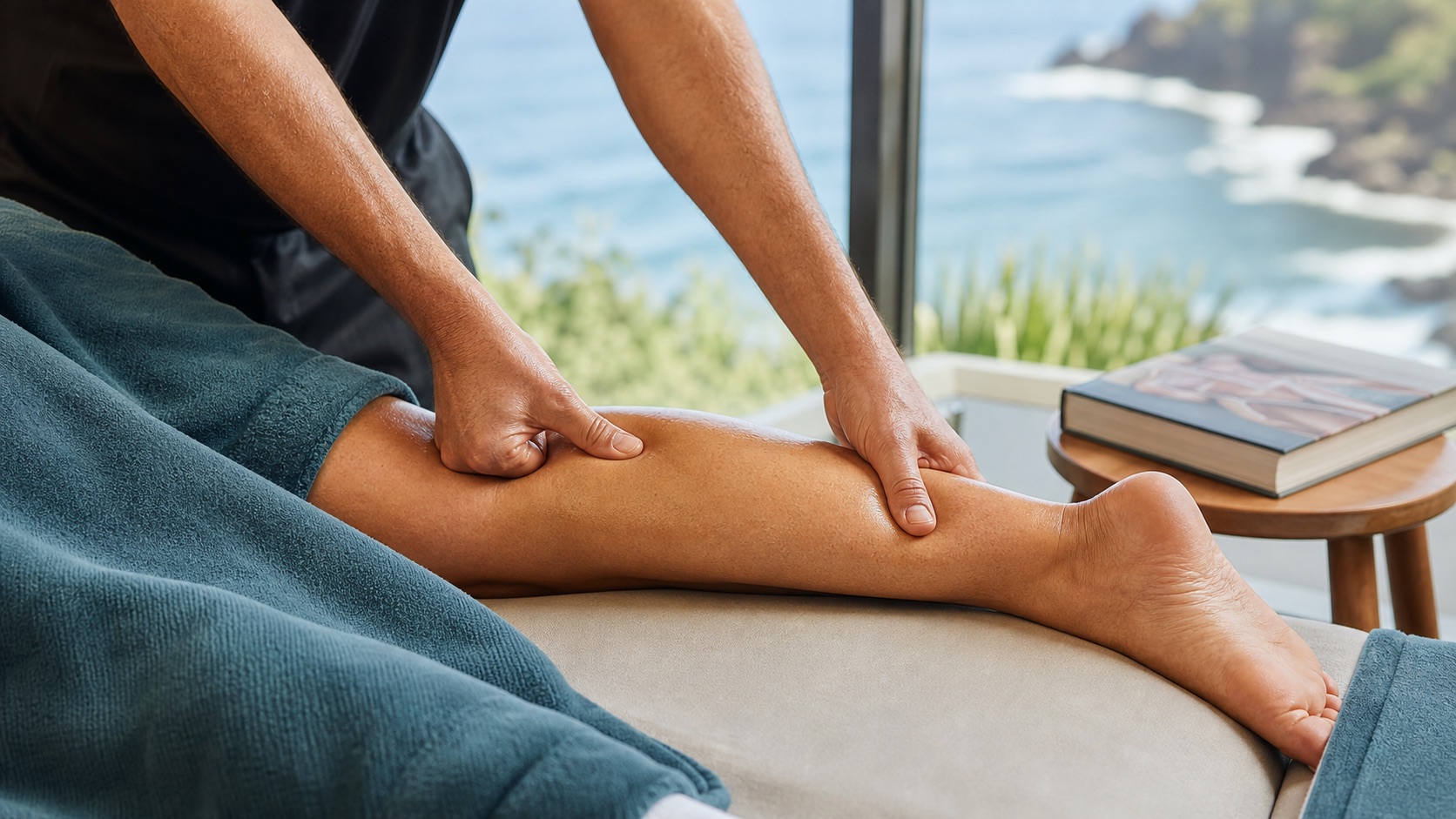
People often describe restricted movement in simple terms: a hip feels stuck, a calf feels dense, a shoulder will not open, or one side of the back seems to pull before the other side does.
Fascia-focused bodywork is one way to work with that feeling. It uses slower, sustained contact instead of rushing from muscle to muscle. The goal is not to force a dramatic release, but to give the tissue and nervous system enough time to change tone.
What fascia is
Fascia is connective tissue that surrounds and supports muscles and other structures. Cleveland Clinic describes it as a continuous structure throughout the body that is normally flexible, but can feel tighter or less mobile after strain, injury, overload, or prolonged holding patterns.
That does not mean every ache is a fascia problem. It means the body is connected, and a local restriction may be influenced by the way nearby joints, muscles, and protective tension patterns are behaving together.
Why the pressure is slow
Fast pressure often makes the body guard. Slow pressure gives you time to breathe, notice sensation, and tell the therapist what is useful. This is especially important around calves, hamstrings, hips, ribs, shoulders, and the feet, where people often feel broad restriction rather than one clear knot.
A mobility-minded session usually pairs pressure with small position changes. The therapist may ask you to flex an ankle, turn the head, breathe into the ribs, or gently move through part of your range. This helps connect the hands-on work to movement you actually use.
What good progress feels like
Progress is not always a huge sensation during the session. Often it is quieter: a longer breath, a warmer limb, a smoother step, less pull at the end of a stretch, or a feeling that one side of the body is no longer doing all the work.
The best test is simple. Before the session, notice one movement that feels limited. After the session, test the same movement gently. If it is easier, more even, or less guarded, that is useful information for the next appointment.